

Fake Nicotine Pouches & Fake Snus: How to Spot Counterfeits

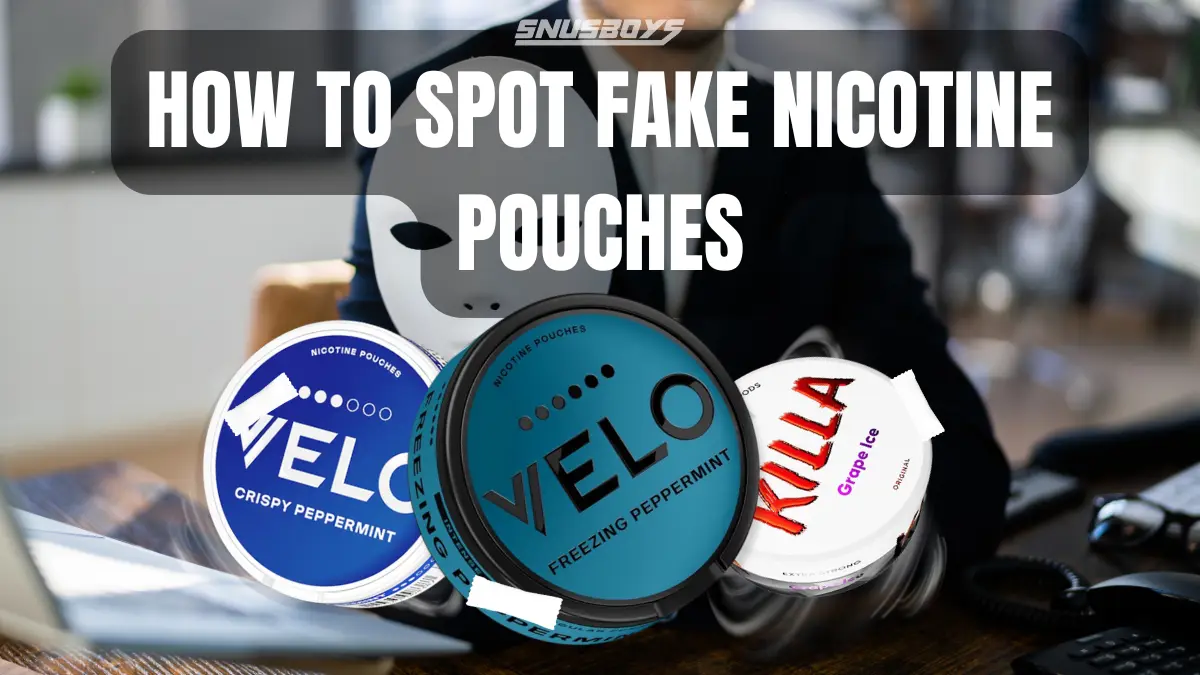
Nicotine pouches have rapidly become a mainstream product in the UK, moving from a niche alternative to something thousands of people use every day. As demand has grown, so has the number of brands, flavours, and strengths available. Alongside that growth, counterfeit and non-compliant nicotine pouches have begun to enter the market.
Like any fast-growing industry, nicotine pouches have attracted manufacturers looking to cash in quickly. Fake nicotine pouches are now being produced to imitate popular brands such as VELO, Killa, and Pablo. These products can look convincing at first glance but are often made without proper quality control or safety oversight.
That matters because this is a product you place in your mouth. Fake snus and counterfeit nicotine pouches can carry real risks, from incorrect nicotine strengths to unverified ingredients. This guide explains how to spot fake nicotine pouches and how to make sure you are buying genuine products in the UK.
If you only read this part
Fake nicotine pouches are now good enough to fool most people at a glance. Price alone is not a reliable indicator, and packaging can look convincing. To avoid fake snus, buy from trusted retailers, check batch numbers or QR codes where available, and be cautious of stock coming through informal supply chains. If something feels off, it probably is.
Jump to section
- What Are Fake Nicotine Pouches?
- Are Fake Nicotine Pouches a Problem in the UK?
- Why Fake Nicotine Pouches Are Dangerous
- Popular Brands Most Commonly Targeted by Counterfeiters
- How to Spot Fake Nicotine Pouches (Checklist)
- How to Check If Your Nicotine Pouches Are Genuine
- Where Fake Nicotine Pouches Are Most Commonly Sold
- What To Do If You’ve Bought Fake Nicotine Pouches
- Final Thoughts: Staying Safe in a Growing Market
- FAQs About Fake Snus and Nicotine Pouches
What Are Fake Nicotine Pouches?
Fake nicotine pouches are products designed to imitate legitimate nicotine pouch brands but are produced outside of official manufacturing and distribution channels. They are often made without proper quality control, ingredient oversight, or accurate nicotine labelling. In simple terms, they are counterfeits pretending to be the real thing.
It’s also important to separate fake products from non compliant ones. Fake nicotine pouches deliberately copy recognised brands such as VELO, Killa, or Pablo, using similar packaging, colours, and naming to mislead buyers. Non compliant products, on the other hand, may be genuine brands but fail to meet UK safety, labelling, or sourcing standards.
Modern counterfeits can look convincing because they are produced using refined machinery and copied packaging designs. These products typically enter the market through grey supply chains, including unofficial wholesalers, cash based distributors, and unverified online sellers. By the time they reach consumers, they can be difficult to distinguish from genuine nicotine pouches without closer checks.
Are Fake Nicotine Pouches a Problem in the UK?
Yes. Fake nicotine pouches are becoming an increasingly real issue in the UK, particularly over the past 12 months. As nicotine pouches have surged in popularity, rising demand has created clear incentives for unofficial producers to exploit gaps in the supply chain. Where demand grows quickly, counterfeits tend to follow, and the nicotine pouch market is no exception.
One of the biggest challenges is that fake nicotine pouches are no longer as easy to spot as they once were. Early counterfeits often stood out due to poor packaging or obvious quality issues. Today, unofficial producers have refined their manufacturing processes, making counterfeit products far more convincing at first glance. This makes it harder for consumers and even retailers to tell the difference between genuine and fake products without closer inspection.
The UK is particularly attractive to counterfeiters because much of the nicotine and vape supply chain is fragmented. Products often pass through multiple layers of wholesalers, including informal, cash-based operators, before reaching retailers. Many sellers are not sourcing directly from manufacturers or authorised distributors, which increases the risk of non-compliant or counterfeit stock entering the market.
This is compounded by regulatory grey areas. Because nicotine pouches do not contain tobacco, they are not regulated in the same way as cigarettes or vapes. While they fall under general consumer safety rules enforced by bodies such as Trading Standards, the lack of product-specific regulation can make enforcement more reactive than preventative, giving counterfeit products more room to circulate.
Why Fake Nicotine Pouches are Dangerous
Fake nicotine pouches are not just a branding issue. They create real problems for users, especially because this is a product designed to sit in your mouth for long periods of time. From our experience in the UK market, the main risks with fake nicotine pouches fall into three areas: inaccurate nicotine strengths, unregulated ingredients, and avoidable health concerns.
Inaccurate Nicotine Strengths
rOne of the biggest issues with fake nicotine pouches is that the nicotine strength on the can cannot be trusted. Products produced by unofficial factories are not subject to proper quality control, and there is no independent checking of how much nicotine is actually being used. What is printed on the label may have little relation to what is inside the pouch.
For users, this removes consistency. You might expect a familiar strength but end up with a pouch that feels far stronger than anticipated, leading to nausea, dizziness, or an uncomfortable nicotine rush. In other cases, the pouch may feel unusually weak. Either way, that unpredictability defeats the purpose of using nicotine pouches as a controlled alternative.
Unregulated Ingredients
Nicotine pouches rely on more than just nicotine. Ingredients such as pH stabilisers, flavouring agents, and fillers all affect how a pouch feels in use. They influence moisture levels, flavour release, gum sensation, and how quickly nicotine is absorbed.
In properly manufactured nicotine pouches, pH levels are carefully managed. A higher pH increases nicotine absorption, which is why some lower strength pouches can still feel effective. When these ingredients are unregulated, there is no consistency or safety oversight. This often results in pouches that feel harsh, dry, overly aggressive on the gums, or simply unpleasant to use.
Health Risks
Because fake nicotine pouches are not properly tested, there is no clear understanding of what they contain or how they have been produced. Poor manufacturing conditions increase the risk of contamination, including exposure to bacteria or other unwanted substances. Combined with inconsistent chemical levels, this can lead to gum irritation, discomfort, and other side effects.
Ultimately, these risks are avoidable. Fake nicotine pouches cut corners at every stage, and that is not something you want in a product you put in your mouth.
Popular Brands Most Commonly Targeted by Counterfeiters
Counterfeiters tend to focus on popular nicotine pouch brands for one simple reason: demand. Well known products sell quickly, and dishonest sellers know there is more margin to be made by cutting corners on items that customers already recognise and trust. The bigger the brand, the easier it is to move fake stock without raising immediate suspicion.
In the UK, the most commonly counterfeited nicotine pouches have historically been VELO and Nordic Spirit. These are two of the most widely used brands in the country, which makes them obvious targets for imitation. Their popularity means counterfeit products can blend into the market more easily, especially when sold through unofficial channels.
More recently, as demand has grown, counterfeiters have also started targeting brands such as Killa and Pablo. Over the past couple of years, both brands have seen a sharp rise in popularity, particularly among experienced users looking for stronger or more flavour forward options. As that demand increases, so does the incentive for fake versions to appear.
In most cases, counterfeit nicotine pouches are found in the highest demand flavours and strengths. These are the products that sell fastest and are least likely to sit unsold, so they are the ones to be most cautious with.
High demand flavours to be especially aware of include
VELO:
- Freezing Peppermint
- Crispy Peppermint
- Bright Spearmint
Nordic Spirit:
- Spearmint
- Mint
- Bergamot Wild Berry
Pablo:
- Exclusive Blue Raspberry
- Frosted Mint
- Grape Ice
Killa:
- Cold Mint
- Grape Ice
- Exclusive Lemonade
Being aware of which products are most commonly targeted makes it easier to spot potential issues before they become a problem.
How to Spot Fake Nicotine Pouches (Checklist)
Fake nicotine pouches used to be easy to spot. Early counterfeits were rough around the edges, with obvious printing issues and poor quality materials. Since around 2024 and into 2025, that has changed. Unofficial producers have refined their machinery and packaging, which means fakes can now look convincing at first glance. Because of that, it is important to look at several signals together rather than relying on one single giveaway.
Price Red Flags
Price is often the first warning sign. On the UK high street, nicotine pouches typically retail between £5 and £7 per can. Online, average pricing is usually closer to £4, with lower prices available when buying in bulk.
Anything significantly cheaper than this should raise questions. That said, there are exceptions. Reputable retailers may run genuine promotions where prices drop as low as £1.50 per can. The key word here is reputable. Established retailers such as Snus Boys have a long trading history and extensive Trustpilot reviews. Extreme discounts from unknown sellers or newly created websites are far more likely to be a risk.
Packaging Quality
Packaging quality is still one of the most useful checks, even though it is no longer foolproof.
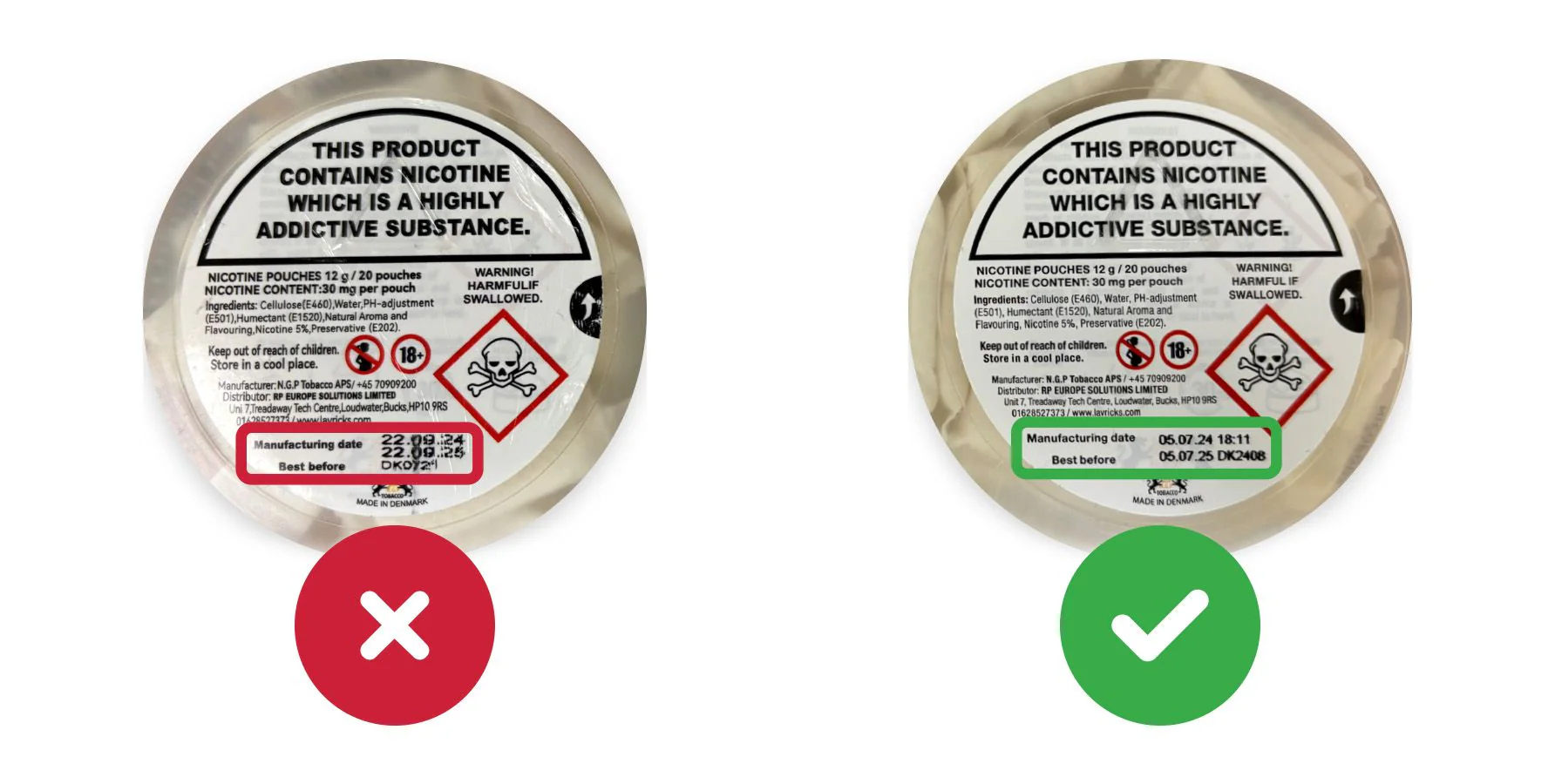
In the image above, both cans appear similar at first glance, but the differences become clear when you look closely. The can on the left is a fake Killa Cold Mint. One of the biggest giveaways is the side sticker, which is white when it should be transparent. Looking closer at the rear label, the font is slightly too bold compared to a genuine product.
You may also notice missing tactile warning markers on fake cans. These raised symbols are designed to help visually impaired users identify products containing nicotine or hazardous substances. Their absence is a strong red flag.
Other things to look out for include poor print alignment, dull colours, flimsy materials, and seals that feel loose or uneven.
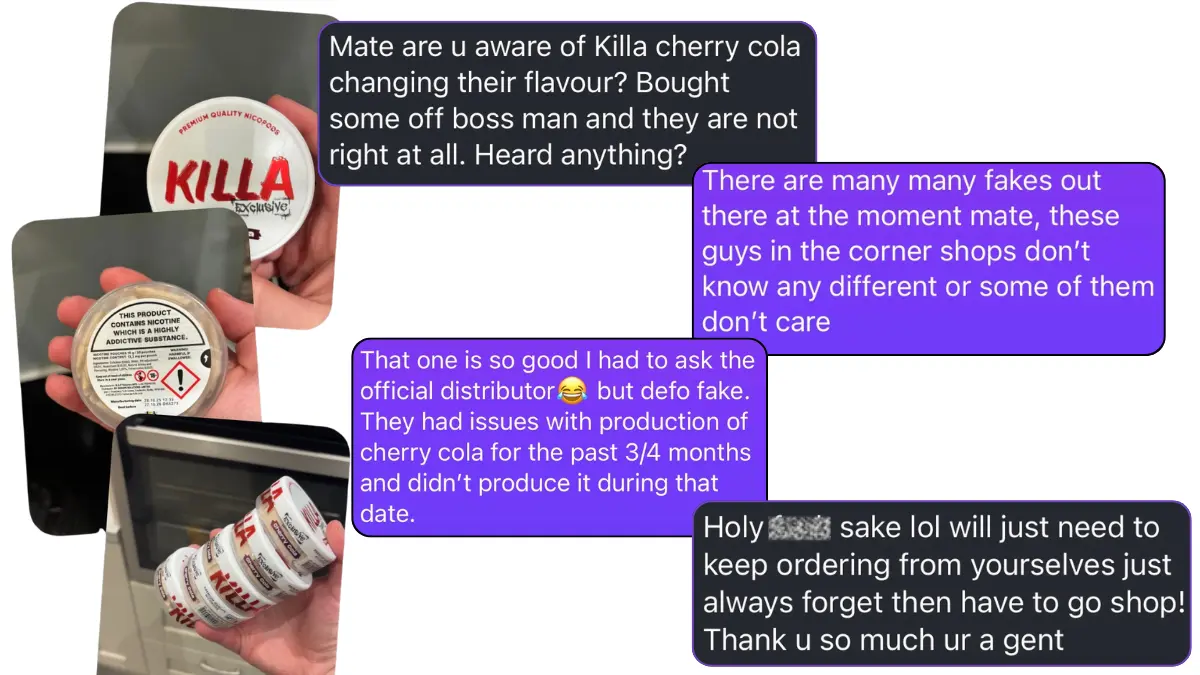
Labelling and Compliance
Legitimate nicotine pouches sold in the UK must include clear English labelling. This should cover nicotine strength, ingredient information, manufacturer details, and traceability data such as batch numbers or production dates.
Missing information, vague strength descriptions, or poorly printed labels are all warning signs. Some manufacturers have also introduced QR code based verification systems, which we will cover in the next section.
Smell, Taste and Pouch Feel
If a pouch passes visual checks but still feels off, trust your senses. Fake nicotine pouches often feel either overly dry or unusually wet. Flavour can be harsh, chemical, or strangely flat, and nicotine release may feel inconsistent, either hitting too hard or barely at all.
While these signs are subjective, they often reflect poor ingredient control and inconsistent production, which are common issues with counterfeit products.
Being aware of these combined signals makes it much easier to spot fake nicotine pouches before they become a problem.
How to Check If Your Nicotine Pouches Are Genuine
If something feels off after running through the checklist above, there are a few extra steps you can take to verify nicotine pouches more confidently. None of these checks rely on guesswork. They are simple, practical ways to confirm whether a product is genuine.
Check the Batch Number
Start with the batch number. Legitimate nicotine pouches should have a clearly printed batch or production code on the can. If the batch number is missing, poorly printed, or unreadable, that is an immediate red flag. When in doubt, you can contact the manufacturer directly and provide the batch number to confirm whether the product matches a real production run.
QR Code Authentication
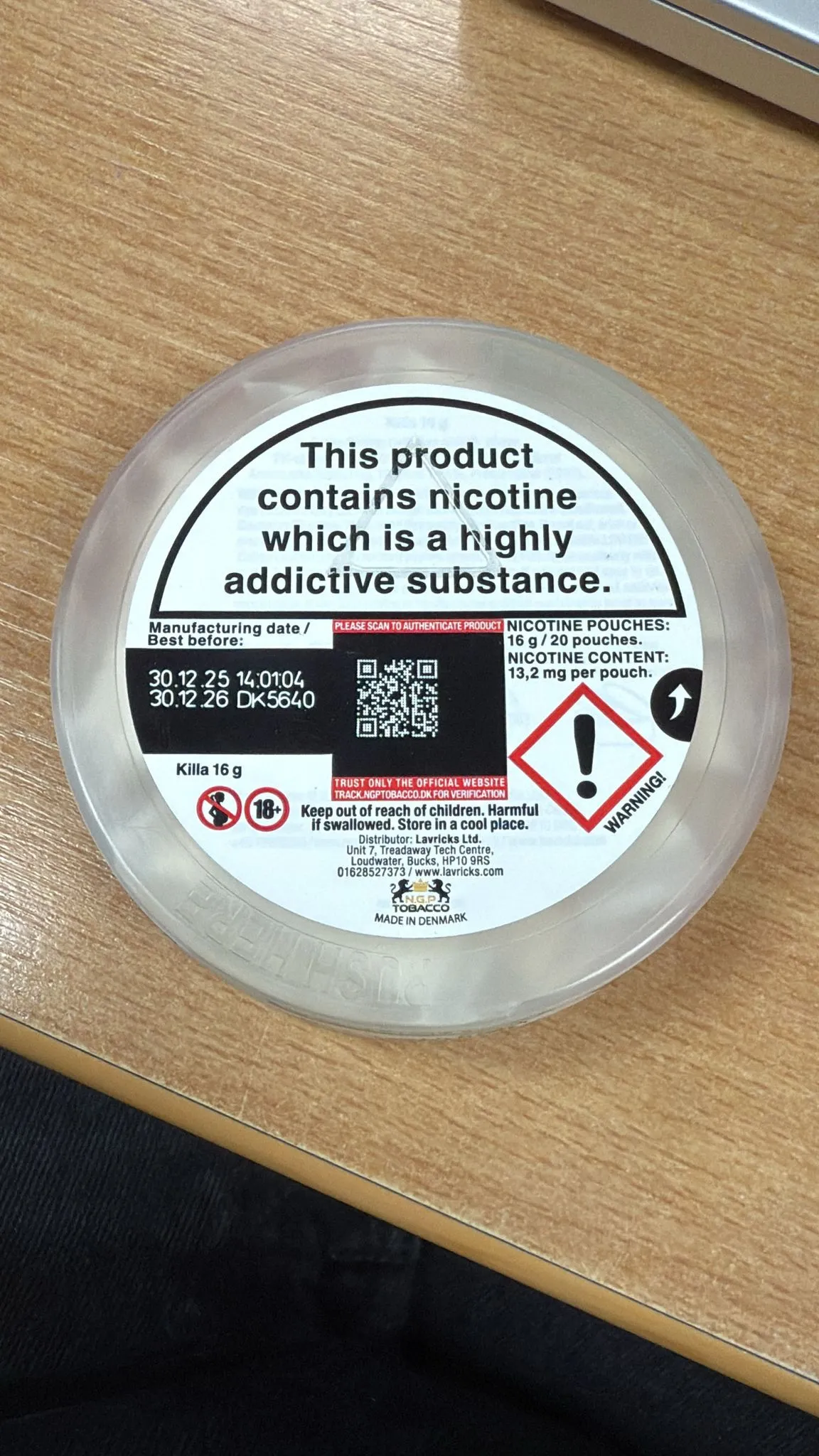
Some brands now use QR codes as an added layer of verification. For example, Killa and Pablo introduced QR code authentication on products manufactured in 2026 onwards. Products made before this date will not have QR codes, and that alone does not mean they are fake.
When scanning a QR code, always check where it sends you. It should redirect to an official brand or manufacturer verification page. If the link is broken, leads to an unfamiliar domain, or shows incomplete information, treat that as a warning sign. Once on the correct page, cross check the product details shown against the can in your hand. Flavour, strength, and product name should all match exactly.
It is also worth knowing that genuine products can only be scanned a limited number of times. If a product shows as invalid, it may simply have been scanned earlier in the supply chain.
Cross Check and Ask as a Last Step
If doubts remain, compare the can carefully against official product images and descriptions. As a final step, reaching out to the manufacturer with clear photos and batch details can provide confirmation and peace of mind.
These checks exist to protect consumers and add confidence, especially for popular products that are commonly targeted by counterfeiters.
Where Fake Nicotine Pouches Are Most Commonly Sold
Fake nicotine pouches most commonly enter the UK market through informal and poorly regulated supply chains. In our experience, this is especially common in physical retail, particularly corner stores in major cities like London. Many of these shops source stock from grey market distributors and resellers, where products change hands quickly and traceability is weak. Over the past year, this has increased to the point where it can be genuinely difficult to know whether a shop is stocking genuine or fake nicotine pouches.
While physical retail is the biggest risk area, unverified online sellers are also part of the problem. Websites with no clear company details, no trading history, or prices that seem unrealistically low often operate outside established supply chains. This is why buying from a reputable online retailer such as Snus Boys matters. Established sellers have clear sourcing, customer accountability, and a reputation to protect.
One important thing to understand is that not all retailers selling fake nicotine pouches are doing so knowingly. Some retailers prioritise margin and are willing to take risks. Others genuinely believe they are buying legitimate stock. Many wholesalers sell fake products alongside real ones, sometimes openly and sometimes without saying a word. We have seen situations where counterfeit and genuine products are mixed together in the same wholesale offering, making it easy for fake stock to slip through unnoticed.
We have even visited wholesale markets in the UK to better understand how this happens. What we found was a mixed picture. Some wholesalers were upfront about selling non genuine products. Others appeared to be doing the same quietly. This environment makes it easier for fake nicotine pouches to spread and harder for retailers and consumers to tell the difference.
Understanding where fake nicotine pouches come from is a key step in avoiding them, for more tips check out our UK snus buying guide.
What To Do If You’ve Bought Fake Nicotine Pouches
If you believe you have bought fake nicotine pouches, the first step is simple. Stop using the product. If something tastes off, feels unusually harsh, or does not match what you expect from a familiar pouch, it is not worth continuing.
Next, contact the retailer you bought the product from and raise the issue directly. Reputable sellers should be willing to investigate where the stock came from and offer a resolution. You can also contact the brand or manufacturer with clear photos of the can, packaging, and batch number. This helps them confirm whether the product is genuine and track potential issues in the supply chain.
If you are confident the product is fake, you can report it to Trading Standards through your local council or via the Citizens Advice Consumer Service. Reporting helps remove unsafe products from circulation and protects other consumers.
When it comes to nicotine pouches, caution is always the right move.
Final Thoughts: Staying Safe in a Growing Market
The rise of fake nicotine pouches is a byproduct of a fast growing market, not a reason for panic. Most issues can be avoided with awareness, a bit of scrutiny, and buying from sources you trust. Knowing what to look for makes a real difference, especially now that counterfeits are harder to spot than they used to be.
Buying smart means paying attention to pricing, packaging, labelling, and verification tools when they are available. Authentic nicotine pouches offer consistency, transparency, and a predictable experience. That is exactly what most users want.
At Snus Boys, we believe informed consumers make better choices. Stay aware, ask questions, and do not settle for uncertainty when it comes to products you use every day.
FAQ’s About Fake Snus and Nicotine Pouches
FAQs About Fake Snus and Nicotine Pouches
Are fake nicotine pouches common in the UK?
Yes. Counterfeit and non-compliant nicotine pouches have become much more common, especially in physical retail where stock is often sourced through grey-market wholesalers. The issue has grown as the market has expanded and demand has increased.
Does a missing QR code mean my Killa or Pablo is fake?
No. Killa and Pablo introduced QR code verification on products manufactured from 2026 onwards. Products made before that may not include a QR code and can still be genuine. Use batch codes, labelling, and sourcing as your wider checks.
What are the biggest signs of fake nicotine pouches?
The most common red flags are prices that are too cheap to be believable, poor print quality or seals, missing or unclear labelling, and pouches that feel wrong in use (overly dry or wet, harsh taste, inconsistent nicotine hit). No single sign is perfect, so look for a pattern.
Can fake nicotine pouches be dangerous?
They can be. The main risks are inaccurate nicotine strengths, unregulated ingredients, and poor manufacturing conditions. Because these products sit in your mouth, consistent quality control and traceability matter.
What should I do if I think I bought fake nicotine pouches?
Stop using them and contact the retailer you bought from. You can also contact the brand with photos and batch details for verification. If you are confident the product is counterfeit, report it to Trading Standards via your local council or Citizens Advice Consumer Service.